Actor Alexander Ustyugov as Yevgeny Bazarov in 'Fathers and Sons' moving picture directed by Avdotya Smirnova
Alexander Ryumin/TASS
Ivan Turgenev is i of the greatest Russian writers, writer of peradventure the best novel about the generational divide between parents and children. In 2018, Russian federation celebrates the 200th ceremony of his birth.
On one side are the noble and conservative 'Fathers' who effortlessly live their old age in lavish estates. On the other side we meet the futurity-looking and progressive 'Sons' who cull difficult work and don't depend on the era. "Permit it rather depend on me!" is their credo. This is the reality of 19th century Russian federation, which is total of contradictions and which Ivan Turgenev depicts in his novel, Fathers and Sons.
While thisis Turgenev'southward virtually famous book, in fact past the 1860s he had already gained a reputation equally a leading writer of his fourth dimension. His stories such as The Hunting Sketches (1952), Mumu (1854), Asya (1857) and others were already very popular, widely read and critically acclaimed. But Fathers and Sons (1862) ultimately put Turgenev's proper name on par with the greatest 19th century Russian writers, such equally Alexander Pushkin, Mikhail Lermontov and Nikolai Gogol. Why is that so?
Captured the trend for rejecting authority
Turgenev felt that the face of the Russian gentry was rapidly changing, and apparently his chief graphic symbol even predicted the ascent of the socialist move. 1 of the literary innovations of Fathers and Sons was the appearance of a new type of graphic symbol: a nihilist, a person who rejects all authorization. The embodiment of this idea was the protagonist, Eugene Bazarov, who is a medical educatee with a pragmatic approach to everything.
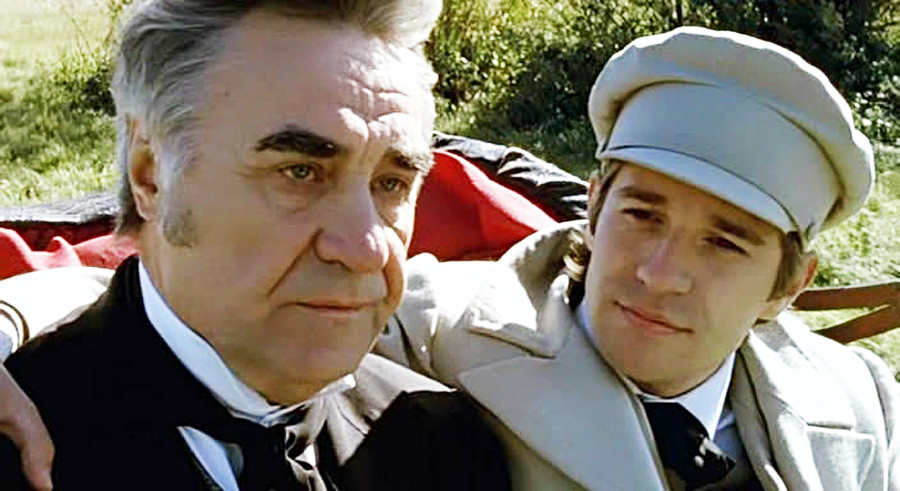
A screenshot from 'Fathers and Sons' movie by Avdotya Smirnova
Avdotya Smirnova/Rekun-Cinema, 2008
Previously, no one like Bazarov ever appeared in Russian literature: he rejected all accepted ideas about politics, family values, social hierarchy, Orthodoxy and nigh every aspect of 19th century life. He fifty-fifty tried to turn down the concept of love, but it inexorably prevailed on him.
In the early 1860s Russian nihilism was on the rise, and Turgenev'southward Fathers and Sons was one of the works that stimulated this intellectual movement, along with the works of Nikolay Chernyshevsky, Dmitry Pisarev and others. In 1862, later on the novel's publication, Turgenev came to a Petrograd that was devastated by fire. Historians think that radical movements might have prepare fires across the urban center. Turgenev recalled the first matter he heard from his friend: "Look at your nihilists: they are burning Petersburg!"
Raised the issue of generational conflict
Ivan Turgenev was besides the first author in Russian literature who openly raised the topic of the generational separate. "Elite, liberalism, principles… Only recollect what a lot of foreign and useless words! To a Russian, they're no skilful for anything!" This is what the young nihilist Bazarov thinks well-nigh the older generation and its conservative way of living. The novel's title in Russian is " Otsy i dety ," which has go a catchphrase still widely used today.
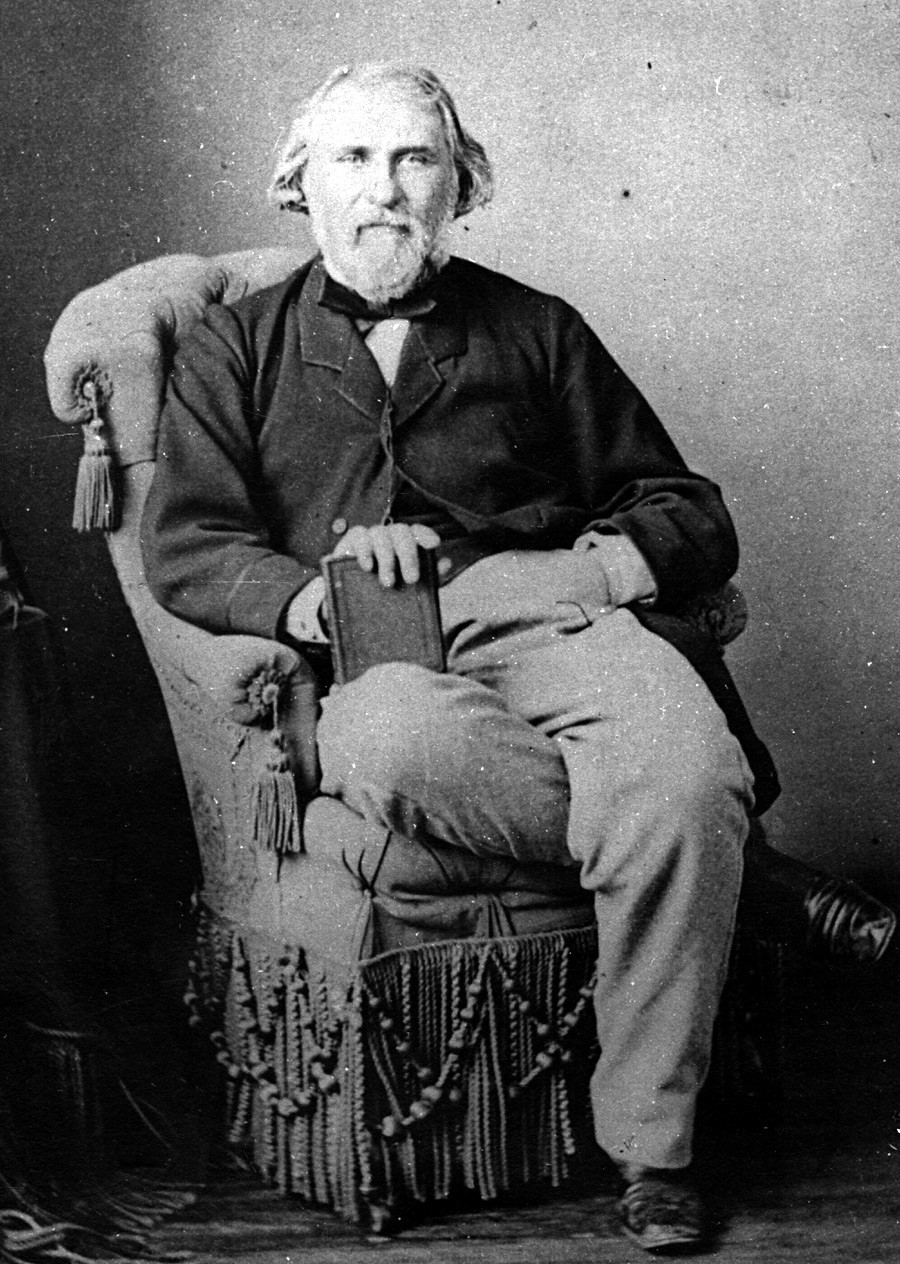
Ivan Turgenev
Getty Images
The book is non only about mutual tensions between parents and children, but also about the two types of 19th century Russian intelligentsia: the noble and very conservative "fathers" wearing starched shirts; and the revolutionary-minded "sons" who are no longer prepare to live like their well-to-do parents who know little about hard work and who cling to archaic values.
Turgenev basically defenseless and summed up the turbulent spirit of his fourth dimension, which not every critic agreed with. Most were impressed with Fathers and Sons' innovative approach and honest eye on 19th century Russian federation, but many critics accused Turgenev of slandering the younger generation and raving about the older ane.
The novel engendered controversial and heated responses, to the extent that Turgenev issued his own statement to clear the air with his critics. He explained that his chief goal was to write nigh reality, without taking anyone's side. Turgenev thought that negative feedback was caused by the nature of his primary character, Bazarov, who was completely new for Russian literature. The audience expected the author either to justify the revolutionary or to judge him – and nil in between. But Turgenev rejected both of these paths, and instead he only portrayed his nihilist as realistically and considerately as possible.
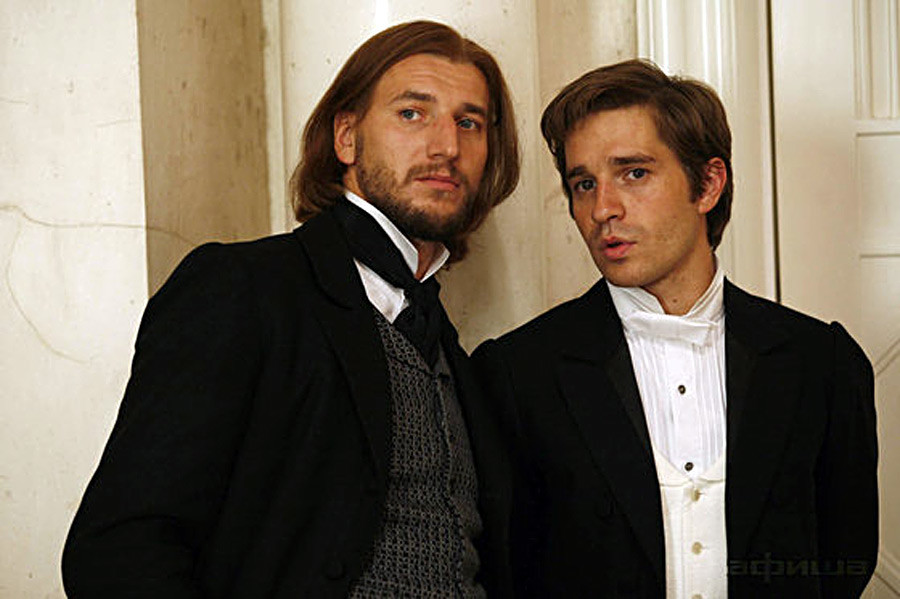
A screenshot from 'Fathers and Sons' flick by Avdotya Smirnova
Avdotya Smirnova/Rekun-Cinema, 2008
In that location's a legend that one of Turgenev's acquaintances suggested changing the novel's title to "Neither Fathers, nor Sons" – which was directly to the point. Turgenev does non justify the cause of any generation; he merely shows the changes that ripened in conservative 19th century Russia. Negation became a revolutionary tendency that non everyone in Tsarist Russia was prepare to have, then Turgenev portrayed all the possible angles of denial in the person of Bazarov: "We act past virtue of what we recognize as beneficial. At the present time, negation is the most beneficial of all – and we deny… Everything."
Read more: Why today'due south feminists would detest Lermontov's 'A Hero of Our Time'
If using any of Russian federation Beyond'due south content, partly or in total, e'er provide an active hyperlink to the original textile.
Get the calendar week's best stories straight to your inbox
0 Response to "An Age of Melodrama: Family, Gender, and Social Hierarchy in the Turn-of-the-century Japanese Novel"
Postar um comentário